To commemorate International Women's Day, which is held on 8 March, Madrid is hosting a new edition of the female creation festival, Ellas Crean. It is a cultural event organised by the Institute for Women and Equal Opportunities, which is holding its 22nd edition from 5 to 15 March 2026 with a multidisciplinary programme that brings together references and new female figures from the world of film, literature, music, theatre and many other disciplines to fight together for political and social change.
For yet another year, and on such an important date as International Women's Day, Ellas Crean celebrates the female creation festival that advocates gender justice. This initiative will include a multi-disciplinary programme at various venues around the city, in which talented women will reveal all of their potential to fill museums, theatres and music halls, cultural centres and other venues with shows created by and featuring women.
In 2026, the festival features a new format, concentrating its programme over ten days and maintaining its commitment to showcasing the best of female creation. In this latest edition, Tetuán will take centre stage, alongside four of the city's major state-owned museums, namely the National Archaeological Museum, the National Museum of Decorative Arts, the Costume Museum and the Ethnological Heritage Research Centre and Museum of America.
The audience will be able to enjoy events featuring Dácil González and Melania Olcina (National Dance Prize winners in 2019 and 2023, respectively), concerts by Leonor Watling & Leo Sidran and Lucía Espín, or the reading of La llama ebria. Anthology of Surrealist Female Poets, among other activities.
Ellas Crean 2026 will continue in the same line as previous editions, featuring proposals by established and up-and-coming artists, often linked to the recovery of memory, in addition to a conscious and steadfast commitment to dance, without forgetting spaces for music, theatre and poetry. This initiative is supported by Tetuán Municipal Council (Madrid City Council) and includes the participation of the Deputy Directorate-General for State Museums ( Directorate-General for Cultural Heritage and Fine Arts, Ministry of Culture).
Dance
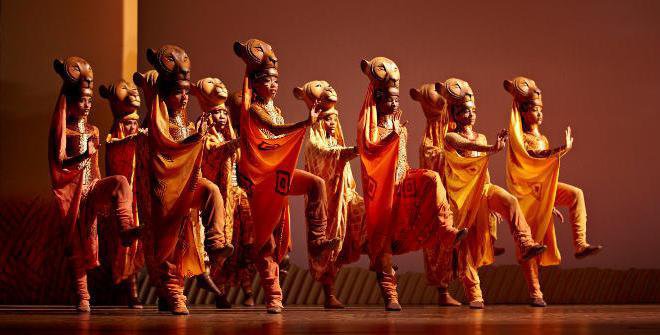
For yet another year, the festival will continue highlighting dance, one of the disciplines most in need of support on the Spanish scene. The 22nd edition will feature Cristiane Boullosa presenting Flor de Desierto with Diana Bonilla, Laura Delgado and Pepe Pereira (5 March, Costume Museum); the Inés Narváez Arrospide 10&10 Company with La Peor de Todas (7 March, America Museum); Lucía Montes & Mado Dallery with After the Drop (8 March, Costume Museum); the Helena Martín Company with an extract from Carne de Perro (11 March, National Museum of Decorative Arts); and Melania Olcina, National Dance Prize 2023, with Halo (Las Voces del Viento) (15 March, Foyer of the National Archaeological Museum).
Music
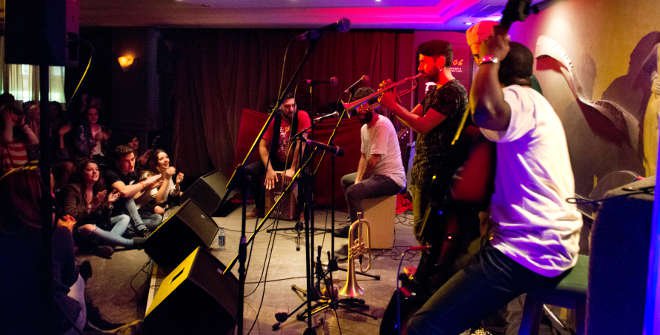
The musical programme brings Leo & Leo (7 March, C.C. Eduardo Úrculo), the latest musical project by the actress and singer Leonor Watling and the musician and composer Leo Sidran, accompanied by The Groovy French Band and two leading musicians on the national scene, Raúl Filiú on the saxophone and Javi Peña on the guitar.
The singer and actress, Lucía Espín, will perform songs from her album that has just been released, Un motivo para volver (14 March, C.C. Eduardo Úrculo).
Theatre and Poetry
The dramatised reading of De Judith a Artemisia (12 March, C.C. Eduardo Úrculo), co-directed by Laura Ledesma (known for her role in the Dos Vidas TV series) and Eva Ramos and performed by Laura Ledesma and Natalia Rodríguez, moves between a thriller, auto-biographical fiction and a critical review of the history of art. De Judith a Artemisia is a text by Laura Ledesma and Laura Calvo.
Poetry comes with the presentation and reading of the book La Llama Ebria. Anthology of Surrealist Female Poets (5 March, C.C. Eduardo Úrculo), which goes beyond the French-speaking cultural sphere and the chronological boundaries attributed to the movement that burst onto the scene as “a new way of describing the world,” combining well-known poets with authors who are unfamiliar to the Spanish public.
See Full Programme

 ellas_crean_2026.png